Abstract
In refrigerated retail environments, meat spoilage is not uniformly distributed across display cases. Scientific observation shows that front-of-case products degrade faster in color stability, lipid integrity, and visual freshness compared to back-of-case products. This spatial inconsistency is driven by environmental gradients including oxygen exposure, photochemical energy input, airflow disruption, and micro-temperature variation. These factors collectively accelerate meat degradation rate and reduce shelf life perception in visible retail zones.
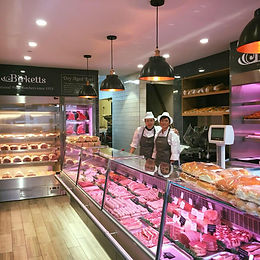
- Spatial Environmental Gradient in Display Systems: A refrigerated meat display case operates as a dynamic micro-environment rather than a uniform cold space. The front-of-case region is continuously exposed to external environmental interference, while the back-of-case region remains relatively insulated.
Key differences include:
- Increased oxygen exchange at the front boundary
- Higher light intensity exposure near viewing glass
- Greater airflow instability due to customer interaction These variations create a measurable disparity in oxidative stress distribution across the display depth.
- Oxygen Availability and Oxidation Kinetics: Oxygen plays a central role in meat spoilage chemistry. At the front-of-case region, repeated air exchange increases oxygen partial pressure at the meat surface. This accelerates myoglobin oxidation meat, converting oxygenated myoglobin into metmyoglobin, which produces the characteristic brown discoloration. From a kinetic perspective, increased oxygen concentration lowers the activation barrier for oxidation reactions, leading to faster visible spoilage compared to back-of-case products where oxygen diffusion is more limited.
- Photochemical Acceleration from Display Lighting: Retail illumination contributes significant photochemical energy to meat surfaces. In meat display lighting systems, photons interact with heme proteins, increasing electron excitation and accelerating oxidation pathways.
This process is known as light induced oxidation meat, where pigment degradation is directly influenced by photon exposure intensity and duration.
Front-of-case products receive:
- Higher direct luminous flux
- Reduced optical shielding
- Greater cumulative photon absorption Back-of-case products are partially protected due to light attenuation through product layering and case depth.
- Spectral Energy Influence on Reaction Rates: Scientific analysis shows that oxidation rates are strongly dependent on spectral composition. Short-wavelength (high-energy) light has a greater impact on molecular excitation.
In non-optimized meat display case lighting, excess blue-spectrum energy increases:
- Oxidation initiation frequency
- Free radical formation probability
- Pigment instability rate This results in faster deterioration of meat color stability, particularly in exposed front zones.
- Airflow Instability and Boundary Layer Disruption: Airflow patterns within display systems are engineered to maintain thermal uniformity; however, the front zone experiences repeated disruption.
This occurs due to:
- Ambient air infiltration during customer interaction
- Open display architecture in many retail setups
- Reduced laminar airflow stability at the case edge These disruptions increase oxygen replenishment and weaken surface cooling efficiency, contributing to elevated oxidative stress.
- Micro-Temperature Variation Across Depth Zones: Although refrigeration maintains an overall controlled temperature, micro-scale thermal differences exist within the case.
The front region often exhibits:
- Slightly elevated surface temperature due to radiant heat absorption
- Reduced convective cooling efficiency
- Intermittent thermal fluctuations caused by environmental exchange Even minor temperature increases significantly accelerate oxidation kinetics, increasing meat freshness indicators degradation rate.
- Lipid Oxidation and Chemical Synergy: In addition to pigment oxidation, lipid stability plays a critical role in spoilage progression. Lipid oxidation meat reactions generate reactive aldehydes and peroxides that further catalyze protein degradation pathways. This creates a synergistic degradation loop where fat oxidation accelerates pigment breakdown and vice versa. Front-of-case products experience stronger lipid oxidation due to combined light and oxygen exposure.
- Oxidative Stress Accumulation Over Time: Continuous exposure to environmental stressors results in cumulative oxidative damage at the meat surface.
This condition, classified as oxidative stress meat products, involves:
- Free radical accumulation
- Protein structural destabilization
- Reduced enzymatic stability Over time, this accelerates meat degradation rate disproportionately in front-facing display zones.
- Implications for Refrigerated Display Performance: From a retail systems perspective, spatial spoilage imbalance affects operational efficiency and product turnover.
Key outcomes include:
- Reduced shelf life consistency across display zones
- Increased reduce shrink meat department losses
- Uneven product rotation requirements
- Lower perceived freshness despite controlled storage conditions Even within a properly functioning refrigerated meat display, these spatial effects persist due to environmental physics.
- Engineering Controls for Spoilage Uniformity: Mitigation requires integrated control of lighting, airflow, and spatial exposure.
Effective food safe lighting meat strategies include:
- Reduction of high-energy spectral peaks
- Uniform illumination distribution across depth zones
- Minimized front-edge radiant intensity These adjustments improve meat merchandising optimization and reduce spatial degradation differences.
- Role of Advanced Lighting System Design: Modern commercial meat lighting solutions are designed to address spatial inconsistency by controlling optical and thermal outputs.
These systems help:
- Stabilize oxidation rates across display depth
- Improve retail meat quality control consistency
- Reduce localized spoilage acceleration This ensures more uniform meat color stability across both front and back zones.