Where shadows start, how to reduce glare on wrap, and how to light every cut evenly
In retail butcher shops and grocery stores, the first impression of fresh meat is visual. Shoppers make snap judgments about quality based on color, texture, and overall presentation. Poor lighting placement can create shadows, glare, and uneven illumination that make even high-quality cuts look less appealing. Understanding where to position lights top rails, shelves, or vertical corners is critical for maximizing visual appeal, reducing shrink, and enhancing sales.
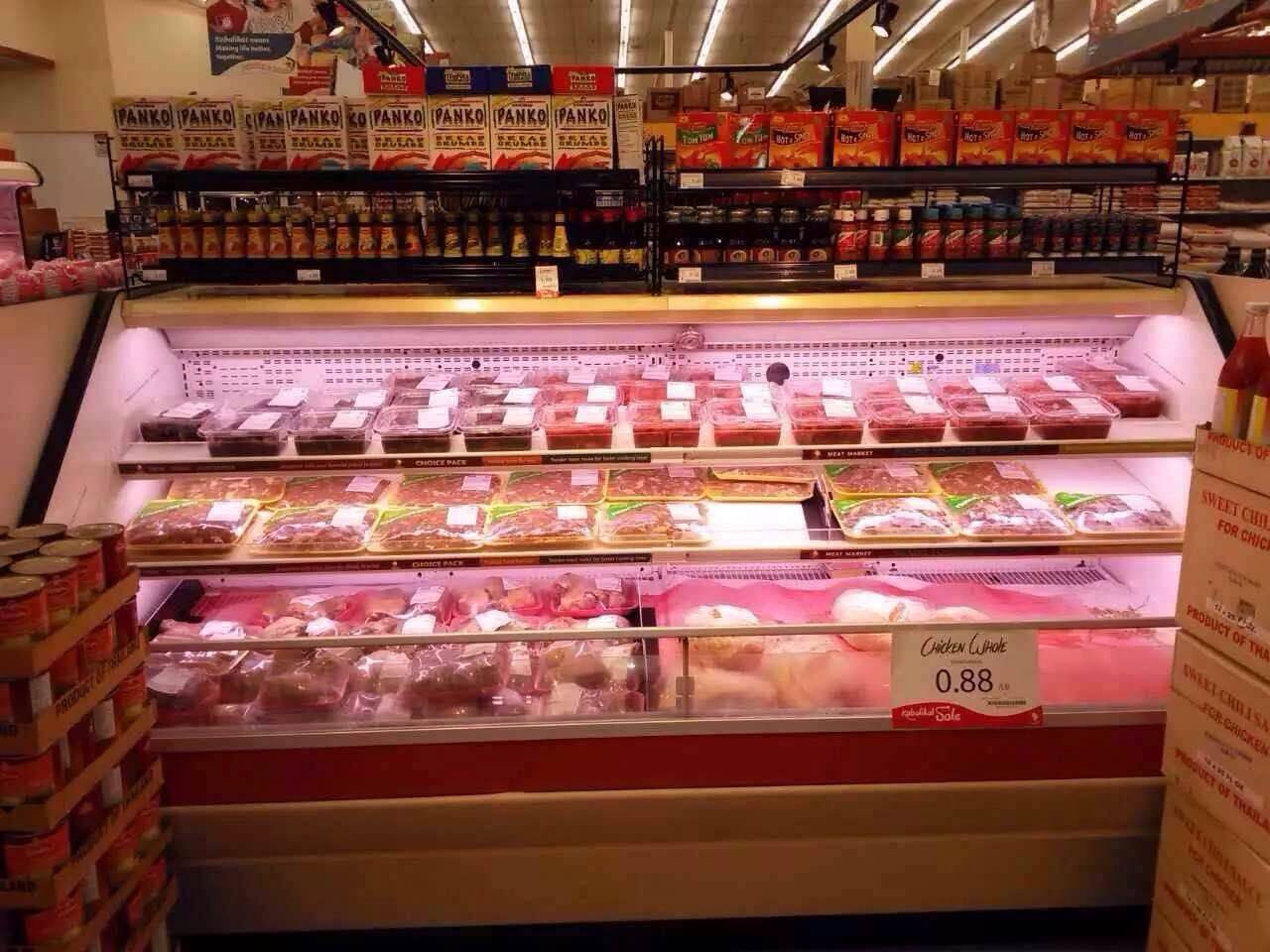
Why Lighting Placement Matters
Meat is highly sensitive to perception. Improperly lit cases can result in:
- Shadows that hide cuts:Uneven illumination can make some pieces appear darker, discouraging purchases.
- Glare on packaging:Wrap or tray reflections can distort color, leading customers to perceive meat as less fresh.
- Color shifts:Light intensity and angle affect how red, pink, or marbled areas appear, impacting perceived freshness.
Proper placement ensures that each cut receives consistent lighting while maintaining natural color and minimizing visual artifacts.
Top Rail Lighting: Advantages and Considerations
Top rail fixtures are mounted along the upper edge of the case, shining downward across the product surface.
Advantages:
- Illuminates the front row clearly, making it easier for customers to see cuts without opening the case.
- Highlights marbling and surface textures, which enhances appeal.
- Easy to access for maintenance and replacement.
Considerations:
- Overhead lights can create shadows on lower shelves if not paired with supplementary lighting.
- Reflections on tray wrap can become noticeable if angle and intensity are not optimized.
- High-intensity top lights may slightly heat exposed meat if too close, affecting freshness over time.
Practical Tip: Use diffused top rail lighting designed for meat displays to reduce heat and soften shadows while preserving color accuracy.
Shelf Lighting: Advantages and Considerations
Shelf-mounted lights sit directly above or below the product on individual shelves, providing focused illumination.
Advantages:
- Reduces shadowing on lower rows caused by top rail lighting alone.
- Allows selective lighting intensity for different products, such as high-value cuts or marinated meats.
- Can be used to emphasize front-row cuts without overpowering the display.
Considerations:
- Installation may be more complex, especially in retrofits.
- Requires careful alignment to avoid hotspots or glare on plastic wrap or trays.
- Energy use increases slightly with multiple fixtures; selecting LEDs helps minimize this.
Practical Tip: Combine shelf lighting with top rail lights to create balanced, uniform illumination across all tiers.
Vertical Corner Lighting: Advantages and Considerations
Vertical lights are positioned along the case sides, directing light inward across the display.
Advantages:
- Eliminates deep shadows in corners and edges where top or shelf lighting may miss.
- Improves visibility of products along case walls, enhancing overall presentation.
- Helps even illumination across multi-tiered cases without adding excessive top brightness.
Considerations:
- Can reflect off side glass if not properly shielded, creating unwanted glare.
- May require custom fixtures or adjustable mounts for different case widths.
- Vertical lighting is most effective when paired with top and shelf lights for a complete coverage solution.
Practical Tip: Use vertical lighting as a complement, not a replacement, to avoid over-complicating installation while still achieving uniform display brightness.
Managing Shadows and Glare Across All Placements
Regardless of fixture location, shadows and glare remain major concerns. Retailers can mitigate these by:
- Diffusing light sources: Softens intensity, reducing sharp shadows and surface reflections.
- Adjusting angles:Tilt fixtures slightly to direct light across the product face rather than straight down or at the glass.
- Consistent spacing:Keep uniform distances between lights to prevent bright and dark spots.
- Case height alignment:Ensure lights are positioned to cover shelf depth evenly.
These steps help maintain natural meat colors, highlight marbling, and reduce the visual impact of tray wrap reflections.
Energy and Operational Considerations
Efficient lighting placement is not just about visual appeal; it also affects operational costs and product longevity:
- LEDs over fluorescents:Lower energy usage and heat output while maintaining accurate color reproduction.
- Reduced compressor load:Properly positioned lights prevent hotspots that can force refrigeration to work harder.
- Ease of maintenance:Accessible top rail or shelf-mounted lights reduce downtime for cleaning or replacement.
Retailers should select lighting that balances aesthetics, product preservation, and energy efficiency.
Integrated Placement Strategy
For optimal display results, a combined approach works best:
- Top rail lights illuminate front rows and highlight textures.
- Shelf-mounted lights balance illumination across all tiers and prevent shadows.
- Vertical corner lights fill in edges and corners for full coverage.
This integrated strategy ensures that every cut, from premium ribeye to standard ground beef, is presented at its best, increasing customer confidence and reducing shrink caused by perceived quality issues.
Conclusion
Lighting placement in service meat cases is a critical factor in visual merchandising and operational efficiency. Top rail, shelf, and vertical corner lighting each offer unique benefits, but the best results come from combining these approaches to create uniform, shadow-free illumination.
By carefully positioning lights, minimizing glare, and selecting food-safe LEDs, retailers can enhance the appeal of fresh meat, reduce perceived discoloration, and maintain consistent color across the display. Proper lighting placement supports higher sell-through rates, decreases waste, and improves customer satisfaction—all without changing suppliers.
For professional guidance and solutions tailored to service meat display lighting, visit www.meatlighting.com and discover how strategic placement can elevate both appearance and sales performance