A side-by-side guide for service counters, self-serve bunkers, and mixed merchandising
Lighting is a critical factor in both butcher shops and supermarket meat departments. While the goal in both environments is to present fresh, appealing products, the approach differs due to display format, customer interaction, and operational constraints. Understanding these differences helps store managers, butchers, and department heads choose lighting that maximizes product appeal, reduces shrink, and supports sales.
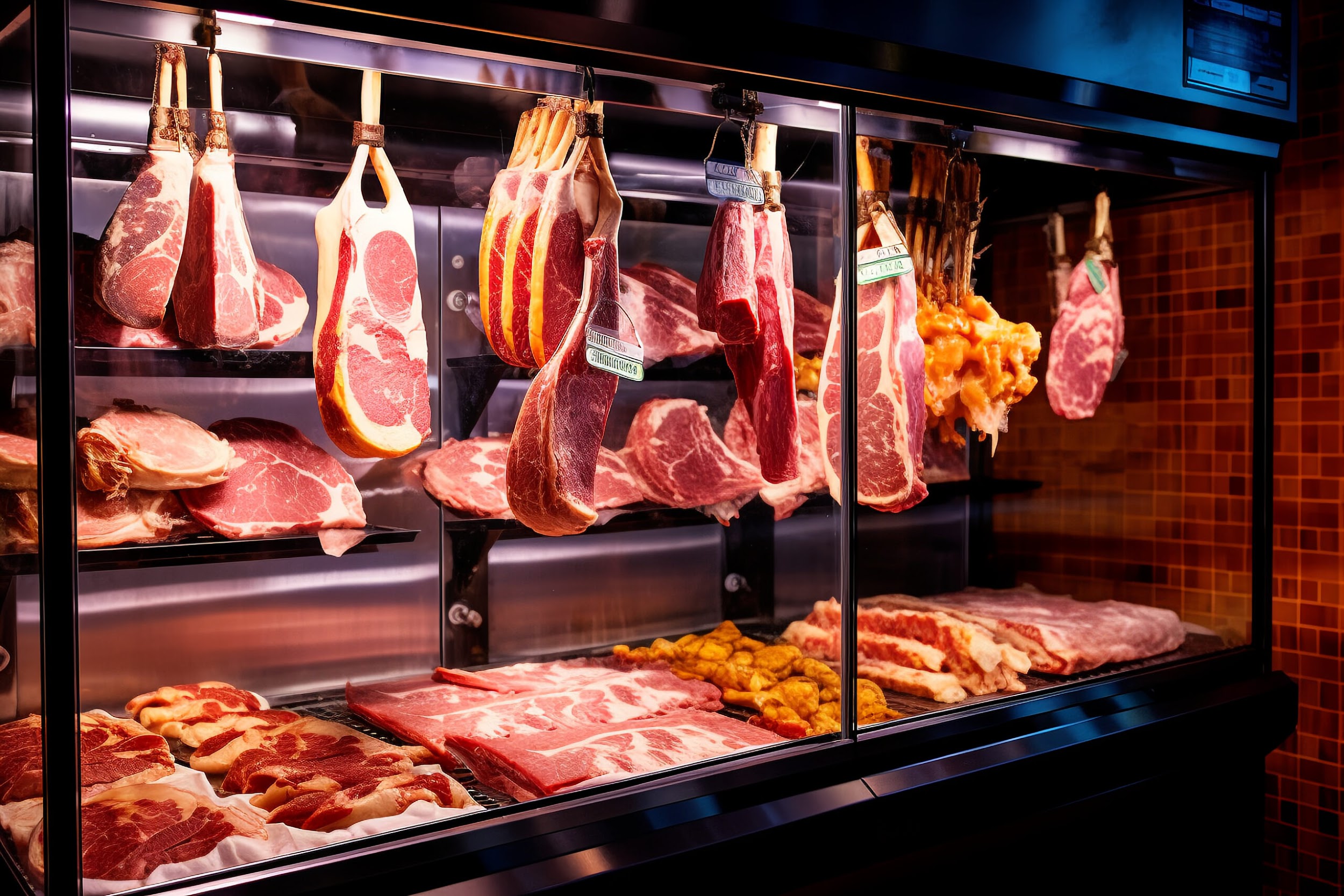
Key Differences Between Butcher Shops and Supermarket Meat Departments
1. Customer Interaction
- Butcher Shops: Staff serve customers directly at the counter, often slicing, wrapping, and presenting individual cuts. Lighting must highlight both the product and the preparation area without creating glare that affects staff visibility.
- Supermarkets: Self-service cases and pre-packaged displays dominate. Lighting must ensure uniform color across the pan, front row, and back rows, as shoppers evaluate products without staff guidance.
2. Display Type
- Service Counters: Open trays and glass cases allow direct visual inspection. Shadows and reflections can make color look uneven if lighting is poorly placed.
- Self-Serve Bunkers: Multiple layers of pre-packaged cuts or trays require even illumination to prevent back-row items from appearing dull or discolored.
3. Merchandising Style
- Butcher Shops: Emphasize premium cuts, marbling, and texture. Lighting must preserve subtle contrasts in lean and fat while showing fresh color.
- Supermarkets: Focus on high-volume presentation with standardized packs. Lighting must make consistent color across multiple SKUs and brands, avoiding misleading hues.
Lighting Goals in Each Setting
- Color Accuracy: Accurate red and pink tones are critical in both environments. Butcher shops may emphasize nuanced marbling, while supermarkets need uniform color for front-facing packages.
- Temperature Management: Lighting should minimize heat contribution to prevent spoilage. Service counters are typically smaller, so fewer lights may be needed, but heat management is equally important.
- Minimized Glare: Glass reflections can obscure product detail. Angled fixtures, diffusers, and lens adjustments reduce glare for both staff and shoppers.
Recommended Lighting Placement by Environment
Butcher Shops
- Top Rail Lighting: Highlights product surfaces without creating hotspots or excessive heat.
- Task Lighting for Staff Areas: Bright, neutral lighting over prep stations ensures cuts are accurately weighed and sliced while supporting color evaluation.
- Vertical Accent Lighting: Optional for premium cuts or specialty displays to enhance contrast and texture visibility.
Supermarkets
- Shelf or Pan Lighting: Ensures back-row trays receive equal illumination to the front row.
- Corner Lighting: Vertical placement reduces shadows along pan edges.
- Case-Length Fixtures: Uniform light output prevents uneven color perception across multiple display sections.
Lighting Specifications to Consider
- Low-Heat LEDs: Essential in both butcher shops and supermarkets to maintain safe temperature ranges and reduce product dehydration.
- Balanced Spectrum (CPI Focused): Preserves natural meat color and avoids yellowing or gray cast.
- Dimmable or Zoned Lighting: Allows adjustments depending on case occupancy, ambient light, or operational needs.
Operational Practices That Complement Lighting
- Monitor Case Temperature: Even low-heat lighting can contribute to minor warming. Verify that cases stay within recommended temperature ranges.
- Airflow Management: Proper circulation reduces condensation and maintains consistent color across trays.
- Regular Maintenance: Clean fixtures and diffusers to prevent dust buildup, which can reduce output and distort color.
- Employee Training: Staff should understand how lighting affects product appearance and how to adjust cases or lighting for optimal visibility.
Benefits of Differentiated Lighting Approaches
- Improved Sales Conversion: Accurate color and visibility enhance customer confidence in purchasing decisions.
- Reduced Shrink: Proper lighting combined with case management slows color degradation and spoilage.
- Operational Efficiency: Minimized glare and even illumination reduce time spent rearranging cases or fielding customer complaints.
- Brand Consistency: Maintains a professional image whether the environment is a boutique butcher shop or a high-volume supermarket.
Final Recommendations for Store Managers
- Evaluate Fixture Placement: Ensure lights complement the case design and customer viewing angles.
- Match Spectrum to Product: Focus on CPI-balanced lighting to preserve natural meat hues.
- Test in Real Conditions: Review products under actual store lighting and ambient conditions before full deployment.
- Coordinate with Refrigeration: Lighting should not compromise case temperatures or airflow patterns.
Conclusion
Butcher shops and supermarket meat departments require distinct approaches to lighting due to differences in display style, customer interaction, and case design. While butcher shops prioritize nuanced color and texture under staff-served counters, supermarkets need uniform illumination across packaged trays and self-service bunkers.
By understanding these differences, managers can select lighting that enhances product appeal, reduces shrink, and improves customer satisfaction. Coordinating fixture placement, light spectrum, heat management, and airflow ensures meat displays look fresh and enticing every day.
For professional-grade meat display lighting solutions designed to optimize color, minimize heat, and reduce shrink, visit www.meatlighting.com and explore products built specifically for butcher shops and supermarkets.