How heat, airflow, and placement affect fogging and steps to reduce visibility problems
Condensation on meat display case glass is one of the most common issues retail meat departments face. Fogged or streaked glass obscures products, frustrates shoppers, and can give the impression of lower quality. While refrigeration and humidity play a major role, lighting choices, fixture placement, and case airflow are equally influential. Understanding these factors helps store managers maintain visibility and product appeal without costly modifications or customer dissatisfaction.
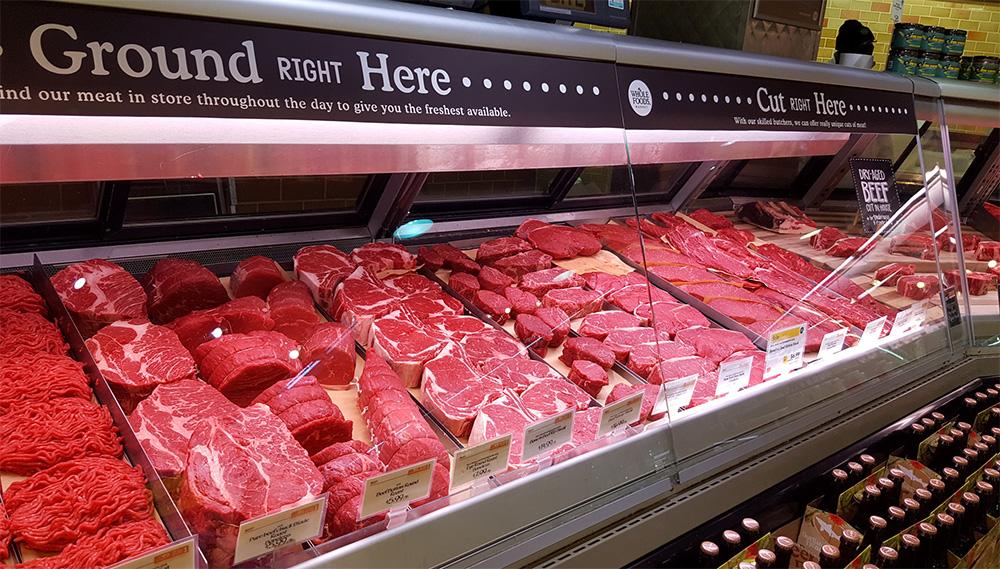
Why Condensation Occurs in Meat Cases
Condensation forms when warm, humid air meets a cooler surface, such as the glass of a refrigerated case. The process is influenced by multiple operational factors:
- Temperature differences: Warmer store air contacting cold glass leads to moisture deposition.
- Airflow patterns: Poor circulation causes pockets of humid air to linger, creating fog spots.
- Lighting heat output: Even low-heat LEDs can slightly raise glass temperature, affecting condensation patterns.
- Customer traffic: Frequent case openings allow humid air to enter, increasing condensation risk.
Left unchecked, fogged glass not only hides product color and texture but also creates hygiene concerns and increases cleaning frequency.
How Lighting Placement Impacts Condensation
The location and angle of lights can influence fogging and visibility:
- Top Rail Fixtures: Illuminate product faces effectively but may create localized hot spots that alter temperature gradients near glass. Proper lens angle and spacing reduce this effect.
- Shelf or Under-Shelf Lighting: Brightens middle and lower shelves, helping shoppers see details without excessive heat transfer.
- Vertical Corner Lighting: Helps reduce shadows and maintains uniform illumination across trays but must be balanced to avoid creating condensation-prone areas.
Testing lighting from multiple viewing angles ensures optimal visibility while minimizing condensation buildup.
Heat Management in Meat Case Lighting
Even minimal heat from display lighting contributes to condensation challenges. Key considerations include:
- Low-heat LEDs: Designed specifically for food display, these reduce thermal impact compared with traditional lighting.
- Spacing from glass: Maintain adequate distance to prevent localized warming of the surface.
- Integrated controls: Dimmable or zoned lighting allows adjustments during peak traffic or humidity periods, limiting condensation risk.
Controlling light-related heat helps maintain consistent glass temperature and improves visual clarity for shoppers.
Airflow and Ventilation Strategies
Proper airflow inside the case complements lighting management to reduce fogging:
- Even air distribution: Prevents pockets of humid air near the glass.
- Case fans or air deflectors: Direct airflow to keep glass surfaces dry without blowing directly onto products.
- Humidity control: Maintaining relative humidity within recommended limits minimizes moisture condensation.
- Coordinating airflow and lighting reduces fog buildup while protecting product quality and appearance.
Practical Steps for Meat Department Managers
Implementing these strategies ensures clear visibility and maintains a professional display:
- Regular Cleaning: Even with optimized lighting, routine glass cleaning prevents streaks and improves product visibility.
- Monitor Lighting Heat Output: Use fixtures designed for refrigerated meat cases and avoid retrofitting general retail lights without proper testing.
- Adjust Placement: Position lights to balance illumination with minimal heat transfer to glass.
- Check Airflow: Ensure fans and deflectors create even circulation; adjust if condensation forms in specific areas.
- Staff Training: Educate employees on the relationship between lighting, temperature, and humidity to prevent inadvertent condensation issues during restocking or case opening.
Following these steps improves the shopping experience and reduces the time and labor spent dealing with visibility problems.
Benefits of Proper Lighting and Condensation Management
Optimizing lighting placement and controlling condensation yields multiple advantages:
- Enhanced Product Appeal: Shoppers see true color, texture, and marbling, increasing confidence in purchasing decisions.
- Reduced Labor Costs: Fewer cleanings are required when condensation is minimized, freeing staff for merchandising and customer service.
- Lower Shrink: Proper temperature and airflow help maintain product freshness, reducing discard rates.
- Professional Store Image: Clear glass communicates quality and hygiene, reinforcing brand credibility.
These benefits translate into measurable improvements in both sales performance and operational efficiency.
Conclusion
Condensation on meat display case glass is not simply an inconvenience it directly affects how products are perceived by shoppers. Lighting plays a critical role alongside temperature control and airflow in managing fogging. By selecting low-heat, balanced-spectrum lighting, placing fixtures strategically, and coordinating airflow, meat department managers can maintain clear, attractive displays.
Optimized lighting improves visibility, reduces labor, and supports overall product quality. Combining these strategies with regular maintenance and staff awareness ensures smoked meats, sausages, and fresh cuts remain appealing from front row to back row.
For professional solutions designed to maintain color, texture, and clarity in refrigerated meat cases, visit www.meatlighting.com and explore lighting systems built specifically for retail meat displays.